
General category guidance
Quartzite Care Guide
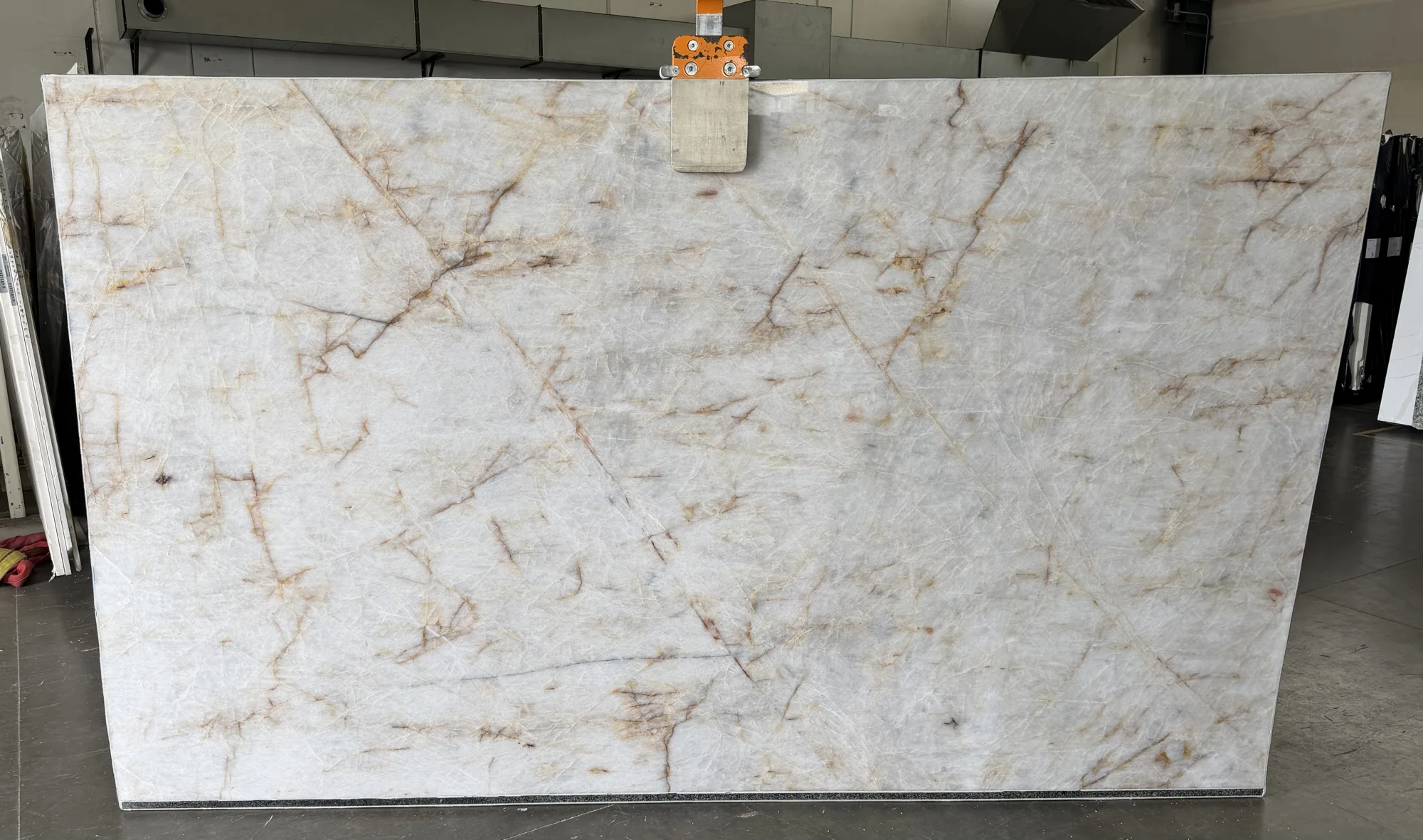
Genuine quartzite is natural metamorphic stone, not engineered quartz. Commercial labels can be inaccurate: confirm the supplied stone and treatment rather than assuming its care from a trade name.
Daily cleaning
Remove loose debris with a soft cloth. Use warm water with a neutral natural-stone cleaner or a mild dishwashing detergent suitable for the installed stone and treatment. Follow product dilution directions, rinse thoroughly and dry with a soft cloth. Too much soap can leave a film.
- Natural Stone Institute — Care & Cleaning of Natural StoneSource checked: 2026-11-14
Heat precautions
Use trivets or heat-resistant mats under hot cookware. A stone surface is not a guarantee against heat damage; protect the installed surface and its treatments.
- Natural Stone Institute — Care & Cleaning of Natural StoneSource checked: 2026-11-14
Scratch & impact protection
Keep abrasive dirt and grit off the surface. Use cutting boards and avoid impacts at edges. A surface is not scratch-proof or chip-proof; deep scratches and damaged edges require professional assessment.
- Natural Stone Institute — Care & Cleaning of Natural StoneSource checked: 2026-11-14
Spill and stain prevention
Blot spills promptly rather than spreading them. Clean with a suitable mild solution, rinse and dry. Use coasters, especially under beverages containing citrus or alcohol. A sealer improves resistance to absorption but does not make stone stain-proof.
- Natural Stone Institute — Care & Cleaning of Natural StoneSource checked: 2026-11-14
What to avoid
Avoid vinegar, lemon, acidic cleaners, scouring powders and harsh abrasive tools unless the exact surface documentation explicitly permits a product. Never mix household cleaning chemicals. Do not use acids to test an installed countertop. Do not attempt grinding, polishing or chemical stain removal without qualified guidance.
- Natural Stone Institute — Care & Cleaning of Natural StoneSource checked: 2026-11-14
When to consult a professional
Consult a qualified stone restoration professional for chips, cracks, deep scratches, persistent stains, heat marks or altered finishes. Cleaning does not repair physical damage or acid etching. Identify the exact stone and treatment before specialized stain removal. Creative Countertops does not claim to offer restoration through this guide.
- Natural Stone Institute — Care & Cleaning of Natural StoneSource checked: 2026-11-14
Understanding surface marks
Oil may darken stone through absorption. Coffee, tea and wine can leave absorbed stains; acidic spills may also alter susceptible finishes. Water spots can be mineral buildup, while soap can leave residue. Dull areas may be residue, staining, altered finish or acid etching—not a diagnosis from appearance alone. If gentle cleaning does not resolve the mark, seek assessment instead of using stronger chemicals.
- Natural Stone Institute — Care & Cleaning of Natural StoneSource checked: 2026-11-14
Sealing considerations
Some natural stones benefit from impregnating sealers, while others may not need them. Ask your supplier about stone variety, porosity, finish, existing treatments and the sealer instructions. There is no universal annual resealing schedule. Sealing improves stain resistance; it does not make stone stain-proof or prevent acid etching.
- Natural Stone Institute — Care & Cleaning of Natural StoneSource checked: 2026-11-14
- Natural Stone Institute — Sealing Natural Stone CountertopsSource checked: 2026-11-14
Material identification matters
Genuine quartzite differs from marble, but stone labels may be inaccurate and treatments can affect the installed finish. Unexpected dull or etched areas warrant checking the actual material with your supplier or a qualified professional. Never use lemon, vinegar or other acids as diagnostic tests on an installed countertop.
- Natural Stone Institute — Care & Cleaning of Natural StoneSource checked: 2026-11-14
- Use Natural Stone — A Deep Dive Into the Properties of QuartziteSource checked: 2026-11-14
When the material is unknown
Use a soft cloth and plain warm water for an initial gentle wipe, then dry. Do not apply specialized chemicals, acids, solvents or abrasive tools. Check installation documents or ask the supplier to identify the stone, product and finish before choosing a cleaner.
- Natural Stone Institute — Care & Cleaning of Natural StoneSource checked: 2026-11-14
Installed-surface guidance
Follow guidance for the specific stone, finish and treatment. Supplier identification and existing care documentation take priority over broad material labels.
- Natural Stone Institute — Care & Cleaning of Natural StoneSource checked: 2026-11-14
Frequently asked questions
Is quartzite the same as quartz?
Genuine quartzite differs from marble, but stone labels may be inaccurate and treatments can affect the installed finish. Unexpected dull or etched areas warrant checking the actual material with your supplier or a qualified professional. Never use lemon, vinegar or other acids as diagnostic tests on an installed countertop.
- Natural Stone Institute — Care & Cleaning of Natural StoneSource checked: 2026-11-14
- Use Natural Stone — A Deep Dive Into the Properties of QuartziteSource checked: 2026-11-14
Does quartzite need sealing?
Some natural stones benefit from impregnating sealers, while others may not need them. Ask your supplier about stone variety, porosity, finish, existing treatments and the sealer instructions. There is no universal annual resealing schedule. Sealing improves stain resistance; it does not make stone stain-proof or prevent acid etching.
- Natural Stone Institute — Care & Cleaning of Natural StoneSource checked: 2026-11-14
- Natural Stone Institute — Sealing Natural Stone CountertopsSource checked: 2026-11-14
How do I clean quartzite?
Remove loose debris with a soft cloth. Use warm water with a neutral natural-stone cleaner or a mild dishwashing detergent suitable for the installed stone and treatment. Follow product dilution directions, rinse thoroughly and dry with a soft cloth. Too much soap can leave a film.
- Natural Stone Institute — Care & Cleaning of Natural StoneSource checked: 2026-11-14
Why does my quartzite have dull spots?
Genuine quartzite differs from marble, but stone labels may be inaccurate and treatments can affect the installed finish. Unexpected dull or etched areas warrant checking the actual material with your supplier or a qualified professional. Never use lemon, vinegar or other acids as diagnostic tests on an installed countertop.
- Natural Stone Institute — Care & Cleaning of Natural StoneSource checked: 2026-11-14
- Use Natural Stone — A Deep Dive Into the Properties of QuartziteSource checked: 2026-11-14
This guide provides general educational recommendations. Always follow the care instructions for your specific stone or surface manufacturer. Actual performance and care requirements vary by material, finish, manufacturer, and installation conditions.